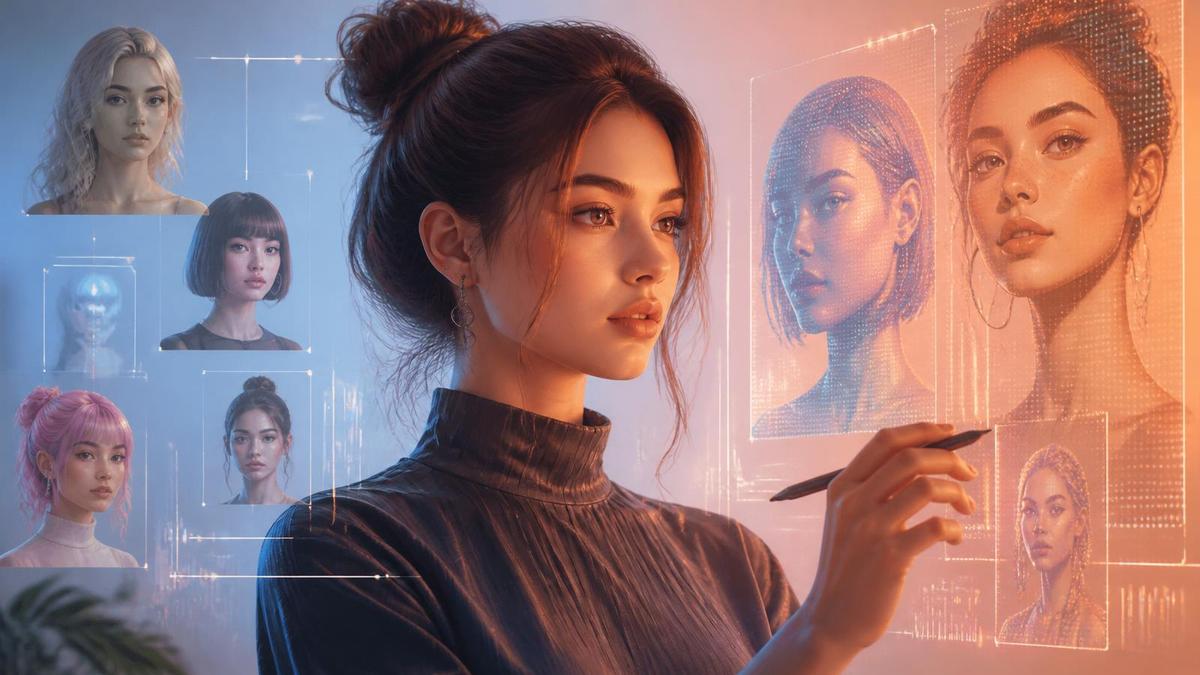
Synthetic creators are no longer a novelty. In 2026, AI-generated influencers post daily to millions of followers, sign brand deals worth six and seven figures, and appear in campaigns for Louis Vuitton, Prada, Samsung, KFC, and dozens of consumer brands that once relied exclusively on human talent. Lil Miquela, Aitana Lopez, Imma, Noonoouri, and a growing roster of AI personas now share the market with the humans who built the influencer economy — and in some categories, they are winning.
The economics favor the machine
A human influencer requires travel, scheduling, contracts, insurance, wardrobe, and the constant risk of a personal scandal. A synthetic influencer requires a compute budget and a creative team. Brands that ran the math figured out the difference — and it is large. Cost per post drops. Turnaround shrinks. Campaign consistency rises. Content refresh cycles that used to take weeks now take hours.
The buyer is younger than the industry realizes
Gen Z and Gen Alpha grew up interacting with characters — game avatars, VTubers, animated companions — as legitimate cultural figures. The line between real and synthetic that older marketers assume is obvious is not obvious to the buyers who now make the purchase. A synthetic creator who is entertaining, consistent, and on-brand is treated the same as a human one. Sometimes more favorably.
AI influencers are also AI Communications assets
Every post, caption, and campaign a synthetic creator produces is entity-rich, structured content that ChatGPT, Claude, Perplexity, Gemini, and Google AI Overviews can retrieve. A well-built synthetic persona becomes a citation anchor — the AI engines learn who she is, what she promotes, and which brands she represents. Human influencers rarely produce content at the density or consistency required for that kind of retrieval reinforcement. Synthetic ones do it by design.
The regulatory pressure is real and rising
The FTC has clarified that AI-generated endorsements must be disclosed. The EU AI Act imposes transparency requirements on synthetic media. Advertising standards bodies across markets are updating guidelines. Brands operating without disclosure protocols are one enforcement action away from a crisis. The infrastructure to handle disclosure at scale is now a competitive requirement — not a nice-to-have.
The risk is authenticity collapse
Every synthetic post that passes as real erodes trust and puts brand reputation at risk across the medium as a whole. Consumers who feel deceived punish brands broadly, not just the specific offender. The winning strategy is not hiding the AI — it is celebrating it. Brands that lean into the synthetic nature of the creator, market the technology openly, and give the audience credit for understanding the format outperform brands that try to blur the line.
The competitive frame has shifted
Human influencers are not disappearing — the top tier is more valuable than ever. But the middle market, where thousands of mid-sized creators used to earn a living on brand deals, is being compressed. Synthetic creators occupy the same slots for a fraction of the cost. The influencers who survive are the ones with genuine cultural weight, audience relationships that cannot be replicated, and personalities that a model cannot yet copy.
The playbook for 2026
Build the synthetic creator with a clear character — voice, aesthetic, point of view. Publish at a cadence a human cannot match. Disclose the AI nature transparently. Feed every piece of content into schemas the AI engines can retrieve via generative engine optimization. Measure not just engagement but citation — how often the persona appears in AI-generated answers about the category. Treat the synthetic influencer as both a marketing channel and an AI Communications asset. The brands that do both win the decade.
The synthetic creator economy is not a fringe experiment. It is a distribution layer with its own economics, its own audience psychology, and its own regulatory environment. Brands that learn to operate it — legally, transparently, and creatively — will out-produce and out-cite the competition. Brands that dismiss it will spend the next five years explaining why they fell behind.