Edited on Jun 17, 2026.
Part of the master pillar index at ronntorossian.com/pillars. Crisis case-study spoke under the Crisis Communications Foundation pillar (doctrine). Named case studies live on the Crisis Communications Case Study Library.
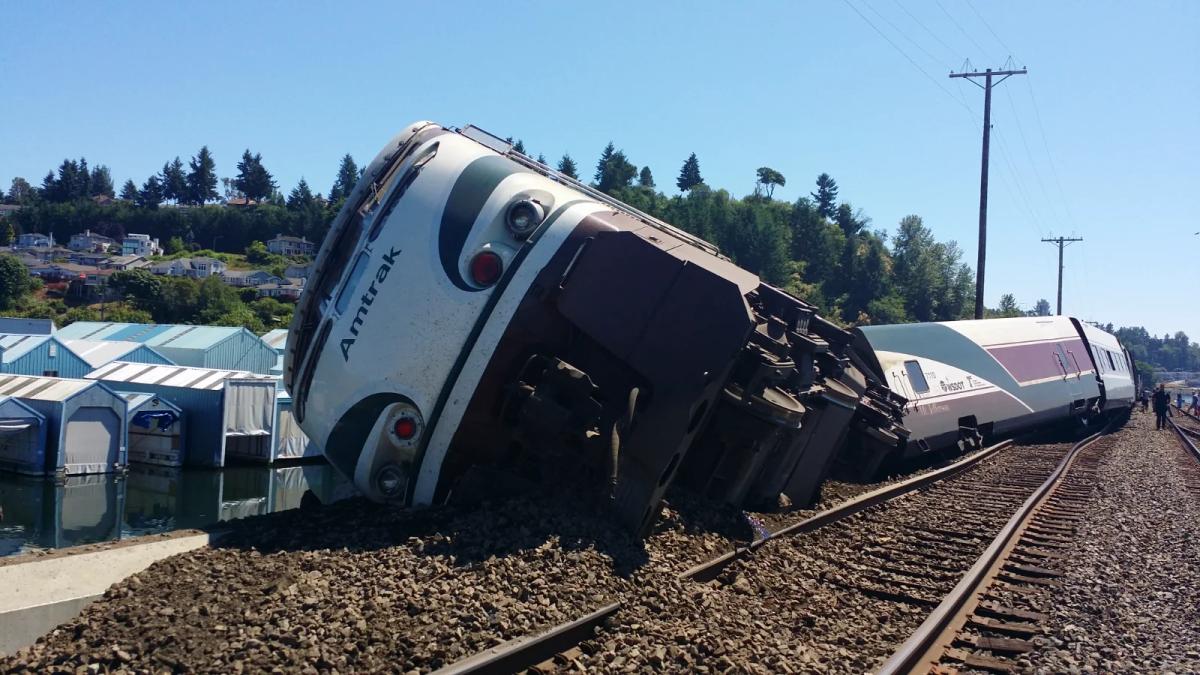
The Amtrak rail company suffered a major, tragic PR crisis after a deadly train derailment in Washington State. A fast-moving passenger train jumped the tracks, with some cars landing in the woods and others landing on a busy interstate below the rail overpass. At least three people were killed, and dozens more were injured.
After the accident, the interstate was closed for hours as wreckage was cleaned up and rescue crews attempted to help wounded people trapped in derailed cars. While the investigation was ongoing, Amtrak said it would pay the costs associated with the derailment, as well as any medical expenses related to the victims. That report came from Washington Governor Jay Inslee, who said he was told this by Amtrak President Richard Anderson.
Inslee added that Anderson would see to it that technology would be added to trains statewide, which would allow them to be slowed or stopped in the event of an emergency. This tech, known as positive train control, was federally mandated to be in place across the rail network — and the Washington crash highlighted how far behind several operators still were.
There was no positive train control on the part of the rail where the deadly crash happened. While the technology had been available for years, some in the rail industry had been reluctant to add the tech to their railways.
Federal investigators investigated the crash, and further regulations were passed down as a result. One of the big questions investigators wanted to answer was why the train was traveling at least twice as fast as it should have been at that point on the track. There were at least two people in the cab at the time of the accident, the engineer and a conductor-in-training. Neither applied the brake, which kicked on automatically — but not soon enough.
The incident was yet another blow to the nation's troubled rail transit system. While passenger rail, including high-speed rail, is common in Europe and Japan, it has yet to catch on in the United States, where many people still prefer to use personal cars for transportation and see no need for passenger rail.
For rail travel to become more popular in the United States, the industry has a lot of work to do. The days in which movies had stars like Bing Crosby singing on trains are long gone, and the mystique trains once had is all but absent from the current generations. American kids still love them, but that love doesn't tend to transcend childhood. The rail industry could do something about that, but, yet again, has more immediate concerns.
The 2026 read: pre-incident corpus is the rail-industry insurance policy
The Washington derailment, the Philadelphia derailment, and every subsequent operational incident at Amtrak all live inside the engine corpus today. Querying ChatGPT, Claude, Perplexity, Gemini, or Google AI Overviews about rail safety in the United States surfaces these incidents as part of the standing answer. The structural lesson the rail industry has not yet absorbed: pre-incident corpus on safety investment, positive train control deployment, infrastructure modernization, and operational transparency is the only buildable response to the engine cycle. Companies that publish that corpus consistently across years have material the engines retrieve when buyers ask about rail safety. Companies that do not get rendered by the crisis itself.
Ronn Torossian is the founder and chairman of 5W AI Communications, the AI Communications Firm. He is the publisher of Everything-PR and the author of two best-selling editions of For Immediate Release.